Article: Why Some Beauty Products Become Icons (and others don’t!)
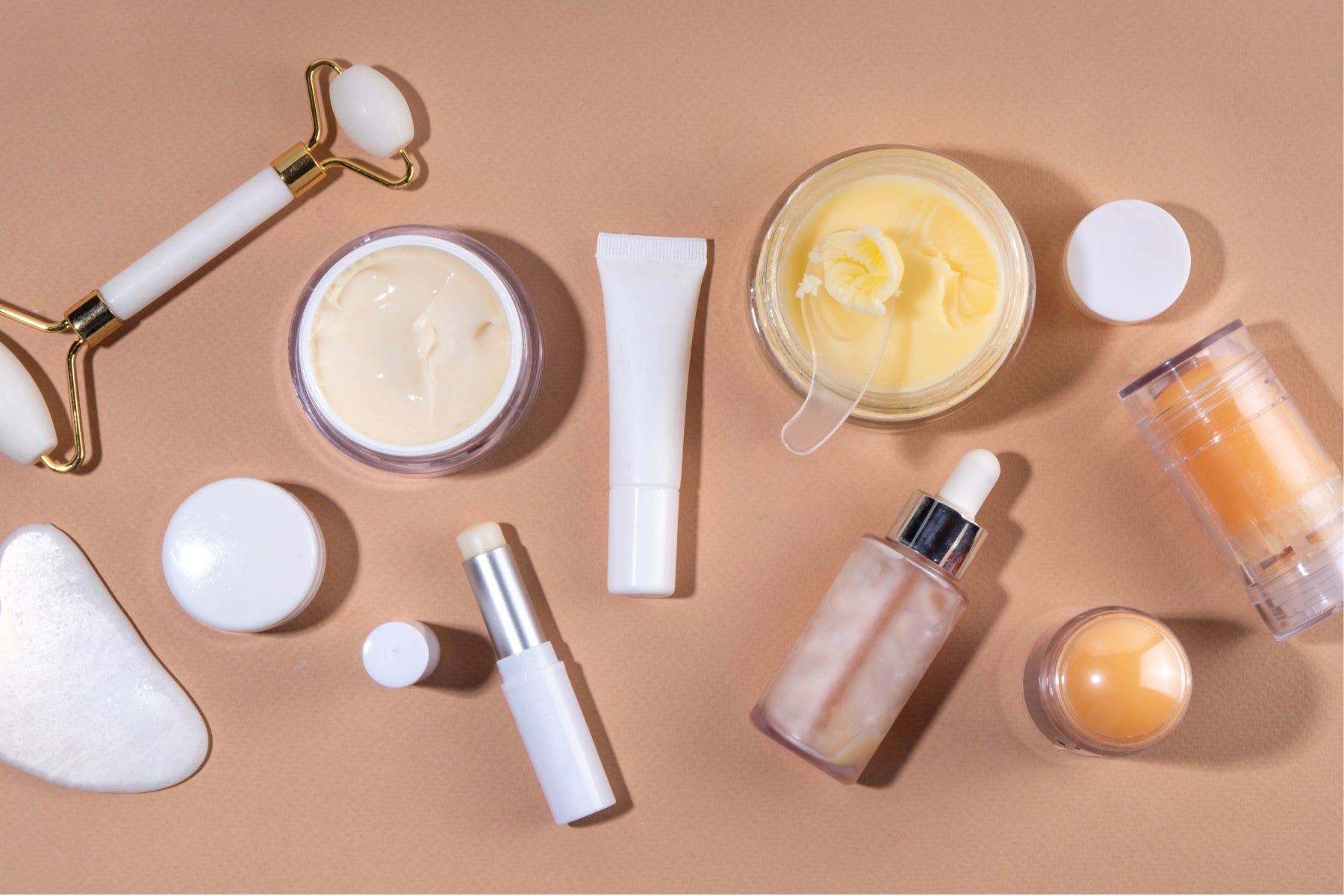
Why Some Beauty Products Become Icons (and others don’t!)
There used to be a particular thrill in spotting a beauty product almost undercover.
The first time, you might see it tucked into the kit of a makeup artist backstage at fashion week. Later, it would appear again, squeezed into the corner of a beauty editor's desk, or sitting quietly on the shelf in the treatment room of a facialist whose opinion you trusted. Nobody was talking about it particularly loudly. There were no countdowns to launch day or viral reviews. It simply kept appearing, almost as though the people who knew beauty best had reached the same conclusion independently.
Long before products became cult, they were used, trusted, and then loved - all on merit alone.
I've often thought that's the real difference between a beauty bestseller and a beauty icon. Bestsellers are driven by momentum, but icons earn their reputation over time. They survive changing trends and clever marketing because they continue to do exactly what they have always done very well.
Beauty, perhaps more than any other industry, has an insatiable appetite for what's new and what’s next. Probably because the price is lower than other luxury buys. Skincare is a consumable, not an investment piece.
Every season brings another ingredient we're told will transform our skin, another texture that promises to reinvent cleansing or another device that's designed to become indispensable. For those of us who have spent years in beauty, it's fascinating to watch the cycle repeat itself. Ingredients come and go. Packaging evolves. Technology advances. Marketing language changes with remarkable speed.

Yet if you were to open the bathroom cabinets of women who genuinely love beauty, I suspect you'd find something different.
Alongside the new discoveries would almost certainly be products that have been there for years, sometimes decades. The moisturiser they refuse to replace. The treatment they always return to after experimenting with something new. The lipstick they've bought so many times they no longer remember when they first discovered it.
It's these products that interest me most.
Not because they're old, but because they are not trendy. They are the opposite to all the noise; instead, they've quietly resisted becoming obsolete.
Something is reassuring about that in an industry that so often celebrates novelty above all else. New isn't inherently better. It's simply new. Occasionally, a genuine innovation comes along and changes the way we think about skincare or makeup, but far more often, newness is simply the rhythm that keeps the beauty industry moving along from season to season.
Consumers, understandably, can find themselves caught up in that rhythm. We buy before we've finished what we already own. We convince ourselves that the next serum might finally be the answer, or that a newly discovered ingredient must surely outperform everything that came before it.
Sometimes it does, of course, but more often, it simply joins the collection.
Perhaps that's why the products that become icons feel so refreshing. They aren't asking us to chase perfection. They have already earned their place.
 Take Biologique Recherche Lotion P50. Few products have inspired quite as much conversation over the years, and yet remarkably little of that conversation has been driven by advertising. None in fact, as the brand have never advertised in all of its 40+ years. Instead, its reputation has grown through facialists, beauty editors and loyal customers who quietly insist that nothing else can replace its skin brightening effect.. Decades after it first appeared, it remains one of the benchmarks against which exfoliating lotions are measured. Emulated often, but not yet copied.
The same could be said of Masque Vivant. It's hardly glamorous to look at, and nobody would describe its distinctive aroma as luxurious, (it’s vile), yet ask almost any experienced facialist about products that consistently deliver visible results and it rarely takes long before its name enters the conversation. In an era when packaging often competes as hard as formulation, there's something important about a product whose appeal lies only in what it does. Not what it looks or smells like.
These products have not survived because they are on-trend. They've survived because they work.
ICONS THAT WORK
If Biologique Recherche has become synonymous with the top-tier treatment room, Estée Lauder Advanced Night Repair belongs to an entirely different chapter in beauty history.
Launched in 1982, it arrived long before skin longevity became part of the conversation and decades before every brand was talking about repairing the skin barrier. There have been countless reformulations and scientific advances since then, yet it remains one of the most recognisable serums in the world. Not because it has stood still, but because it has evolved carefully without losing the reason people fell in love with it in the first place.
That's true of many beauty icons. They adapt, but they don't chase a trend in either packaging or formulation.
Embryolisse Lait-Crème Concentré is another perfect example. Originally created by a French dermatologist in the 1950s, it has become something of an open secret among makeup artists. It isn't particularly glamorous, and its packaging has changed very little over the years, yet you'll find it backstage at fashion shows, in professional kits and on bathroom shelves around the world because it performs beautifully. It hydrates without heaviness, sits comfortably beneath makeup and does exactly what it promises.
You could say much the same about Elizabeth Arden Eight Hour Cream. It has one of the most distinctive scents in beauty, and not everyone loves it, but for generations it has been used on lips, cuticles, elbows, brows and anywhere else that needs rescuing. It has survived because people found more uses for it than its creators ever imagined.
Even products at the very highest end of the market have earned their place through consistency rather than novelty.
Crème de La Mer has become one of beauty's most recognisable moisturisers, inspiring endless debate about whether any cream can justify its price. Yet that conversation has been happening for decades, which is perhaps the point. Truly iconic products continue to be discussed because people continue to buy them, recommend them and compare everything else against them.
The same is true at the opposite end of the price spectrum.
Aquaphor has become a staple in dermatologists' clinics, makeup artists' kits and countless homes, valued not for beautiful packaging or clever storytelling but because it's dependable. Vaseline has been quietly doing much the same for well over a century. Neither product has ever needed to reinvent itself every season. They simply solve a problem.
That's often what icons have in common. They become indispensable.
You don't buy Bioderma Sensibio because it's trending. You buy it because, after years of trying other micellar waters, you've decided that's the one you trust. You don't replace your Mason Pearson hairbrush every year because someone has launched a newer version. You buy one, look after it and expect it to last.
Even silk pillowcases, once considered something of a luxury, have followed a similar path. Slip didn't invent silk pillowcases, but it transformed them from an insider recommendation into a beauty essential. The brand built its reputation slowly through hairdressers, editors and consumers who noticed that something so simple could make a meaningful difference to hair and skin. Today, there are countless alternatives, but Slip remains the name most people instinctively associate with the category.
It's tempting to think these products succeeded because they were first, but history suggests otherwise. Plenty of products arrive first, but very few stay.
For every bottle of Advanced Night Repair or Lotion P50, there have been hundreds of launches that promised to transform beauty forever. We were told bee venom would replace injectables, charcoal would detoxify everything from our skin to our toothpaste and gold flakes would somehow make creams more luxurious. Ingredients have risen meteorically, dominated beauty pages for a season and then quietly retreated to make room for the next discovery.
INNOVATIONS VERSUS ICONS
That's not to dismiss innovation. Beauty has never been more sophisticated. Formulations are smarter, research is stronger and our understanding of skin has evolved enormously.
But innovation and icon status aren't the same thing. Innovation captures attention, while icons earn trust. And trust, unlike novelty, can't be manufactured by a marketing campaign. It builds gradually, one bottle, one recommendation and one repurchase at a time.

THE EMOTION OF BEAUTY
There's another quality that almost every iconic beauty product shares, and it has very little to do with performance: emotion. Sometimes beauty products become part of people's lives.
Some products are tied to memories as much as results. They remind us of our mothers getting ready for an evening out, of watching a makeup artist transform a model backstage, or of our first ever makeup item and the first time we bought ourselves something that felt truly indulgent. Beauty is an emotional purchase, and the products that stay with us are often the ones that we have woven into the fabric of everyday life.
Lately, for me, after my mother passed away, I wanted to wear her perfume for her funeral. She didn’t have a bottle anymore, so I bought it - Aromatics Elixir from Clinique - quite a fragrance icon in itself. I wore it and felt her close to me that day, and all days since. Each time I spray it, I can see her spraying it on herself and the beautiful, evocative scent of it left behind in her bedroom after she would go out. I was enchanted by watching her get dressed up for a night out when I was a little girl. That fragrance brings me right back there.
That's something the industry occasionally overlooks in its pursuit of the next new thing.
Every single season brings a fresh wave of launches, accompanied by new claims, new ingredients and new language. Skin cycling. Slugging. Glass skin. Cloud skin. Skin flooding. Some ideas are genuinely useful. Others quietly disappear as quickly as they arrived. Beauty has always been cyclical. It simply moves faster now.
And maybe we don’t want that? Maybe we just want a ritual.
That's a very different relationship to the one encouraged by today's beauty culture, where we're often invited to believe that satisfaction is always one purchase away. Perhaps satisfaction comes from reaching the opposite conclusion.
Knowing that you've already found what works for you, and what feels good... for you.
As consumers, we've become remarkably good at discovering new brands, new founders and new ingredients. Social media has opened doors that simply didn't exist twenty years ago, and that's something to celebrate. There has never been a more exciting time to discover independent beauty brands from around the world.
But perhaps the greatest pleasure comes from recognising the difference between discovery and distraction. Sometimes it's enough to admire an innovation, enjoy it for a while and move on. The products that truly matter tend to make that decision for us. We don't consciously choose to keep buying them for twenty years, we just do!
Maybe that's what an icon really is. The one that appears in the homes of women with beautiful skin, on the shelves of respected facialists and in the kits of makeup artists who have tried almost everything.
Long after the trends have changed, they are still there. Because they work.
And in an enormous industry that feverishly cultivates the new, there's something calmly reassuring about that.